


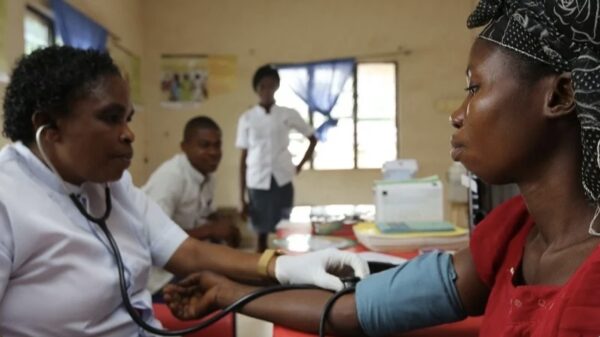
LAGOS, Nigeria — August 24, 2025 – In a disturbing double blow, Nigeria has earned two of the world’s most alarming health records in the same year: the lowest life expectancy globally and the most dangerous place to give birth. These grim rankings, confirmed by both the BBC and the United Nations, have triggered outrage, despair, and fierce debate across Nigeria’s public sphere.
The BBC’s recent health investigation declared Nigeria the worst country to safely give birth, citing a chronic shortage of medics, dilapidated health infrastructure, and a startlingly high maternal mortality rate. Shortly after, the UN’s 2025 World Population Prospects placed Nigeria at the bottom of the global life expectancy rankings — with an average of just 54.6 years, far below the global average of 73.5 and a shocking 32 years shorter than Monaco, the world’s highest.
“We are not at war, but we are dying younger than countries that are,” one user on X (formerly Twitter) lamented, a sentiment echoed in thousands of posts trending under hashtags like #NigeriaHealthCrisis and #FixOurHospitalsNow.
Life Expectancy: A Measure of National Wellbeing
According to the UN report, Nigeria now ranks last among the world’s 193 nations for average life expectancy. The West African giant joins 24 other African countries on the list of lowest-ranked nations, with only Nauru, a small island in the Pacific, as the lone non-African entry.
Analysts say Nigeria’s low life expectancy reflects a convergence of multiple failures: underfunded public health, widespread poverty, poor sanitation, environmental hazards, and weak social safety nets.
“Nigeria’s macroeconomic outlook might look promising to investors, but at the micro level, people are dying needlessly,” said Moses Lawal, a Lagos-based development economist. “You can’t have billion-dollar companies beside collapsing hospitals and expect life expectancy to rise.”
Childbirth in Crisis: A Deadly Gamble
In April 2025, the BBC published a harrowing investigation that labeled Nigeria the most dangerous country for childbirth, based on maternal and neonatal mortality data. Experts attributed this status to poor prenatal care, lack of emergency obstetric services, and systemic neglect of women’s health.
Rebecca Ejifoma, a health journalist and SDG advocate, told BusinessDay that the crisis is rooted in more than just medical neglect — it’s a human rights issue:
“Safe childbirth is not just medical; it’s about dignity and equity. Until Nigeria treats maternal health as a social justice issue, this cycle of preventable death will continue.”
Ejifoma’s comments echo the viral posts from healthcare workers, who have taken to Instagram and TikTok to expose dire hospital conditions, missing medications, and overflowing wards. One nurse in Kano posted a video of a labor ward with no electricity, captioned: “We’re using phone flashlights to deliver babies.”
The Child Mortality Epidemic
Beyond maternal health, child survival is another area where Nigeria falls short. The 2023-24 Nigeria Demographic and Health Survey (NDHS) revealed under-five mortality still stands at 110 deaths per 1,000 live births — more than four times the global Sustainable Development Goal (SDG) target of 25 per 1,000.
The leading causes of child deaths remain malaria, diarrhea, pneumonia, and malnutrition, according to the Nigeria Child Survival Action Plan (NCSAP 2025–2029). The World Health Organization estimates malnutrition alone contributes to 45% of under-five deaths in Nigeria.
These numbers are not abstract. They represent lives lost due to the absence of affordable vaccines, poor water sanitation, and the lack of basic medical supplies — conditions that are largely preventable with modest public investment.
Unequal Death: Nigeria’s Regional Disparity
The tragedy of Nigeria’s health crisis is compounded by stark regional disparities. In the northwest region, child mortality for ages 1-4 hits 117 per 1,000, nearly triple that of southern zones, where it ranges between 20 and 39.
Health analysts on Facebook and local forums have pointed to worsening insecurity in the North — including mass displacement, banditry, and the destruction of rural clinics — as a key driver of these disparities.
Government Reaction: Plans vs. Reality
At the 75th World Health Assembly, Nigeria was named among 54 countries targeted for accelerated intervention. In response, the Federal Ministry of Health unveiled the Nigeria Child Survival Action Plan 2025–2029, promising a renewed commitment to integrated child health services and expanded access to essential medicines.
Health Minister Muhammed Ali Pate emphasized:
“This plan is about transforming policy into tangible results. We owe it to every Nigerian child.”
But online, skepticism dominates. On Threads and X, users questioned whether previous health plans had ever been fully implemented. A trending TikTok clip featuring abandoned primary healthcare centers with broken ceilings asked simply: “Where did the money go?”
The Way Forward: Reform, Resilience, and Responsibility
Experts say turning the tide will require more than UN statistics or policy announcements. It needs equitable health financing, community health investment, rural hospital revitalization, and transparent implementation.
As Rebecca Ejifoma put it:
“This is a test of leadership. Nigeria must prioritize the health of its mothers and children. Not just in Abuja meetings, but in real, life-saving changes on the ground.”
Until then, the cold truth remains: in 2025, the average Nigerian is born into danger and dies too soon.