


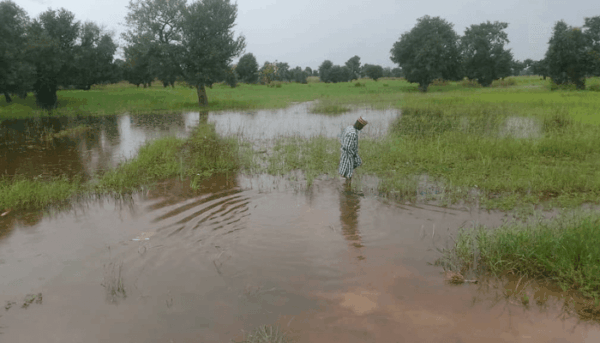
DUTSE, JIGAWA STATE, NIGERIA – Heavy rainfall has devastated agricultural communities across Babura Local Government Area in Jigawa State, destroying approximately 995 rice farms across 16 villages in Kuzunzumi ward alone, threatening Nigeria’s food security and farmers’ livelihoods.
The persistent downpours, which began in recent weeks, have wreaked unprecedented havoc across one of Nigeria’s most productive agricultural regions. Jigawa State, which contributes over 60% to Nigeria’s Gross Domestic Product through agriculture and employs more than 90% of its population in farming activities, now faces a critical challenge to its rice production capacity.
The affected villages include Kwagga/Martini, Fadibara, Kuzunzumi, Jikan Kanwa/Fulani, Dangaigai, Dankarda, Karfawa/Kanawa, Burukum Gari, Sabuwar Baka, Shashatu, Burukum Fulani, and Kurtulla. Abdurahman MaiKano, spokesperson for the devastated communities, expressed deep concern over the flooding’s potential to trigger widespread food shortages and income losses.
“This disaster has put many families at risk. We urgently appeal to the state government and relevant agencies to come to our aid and alleviate the hardship,” MaiKano stated during Wednesday’s briefing with journalists. The scale of destruction extends far beyond individual farms, threatening the broader agricultural ecosystem that supports thousands of families in the region.
Suraja Muhammad, a local rice farmer affected by the floods, emphasized that this has become an annual ordeal for farming communities. “We face these challenges every year. The government needs to engage experts to help prevent and control these recurrent floods,” he urged, highlighting the systemic nature of the problem plaguing the region.
Mallam Musa, another flood victim, explained the broader implications of the disaster: “This flood has wiped out large hectares of rice farms, a critical staple and source of livelihood for many in the area. This not only threatens farmers’ incomes but also raises fears of a wider food crisis ahead”.
Nigeria’s Rice Production Under Threat
The timing of these floods couldn’t be worse for Nigeria’s agricultural sector. Jigawa State is positioned to supply 50% of Nigeria’s total rice demand by 2030, with ambitious plans to expand rice cultivation from 200,000 hectares in 2024 to 500,000 hectares by the end of the decade. The state currently produces over 600,000 metric tons of rice annually and cultivates over 150,000 hectares of rice fields.
Nigeria is Africa’s largest rice producer, generating about 8,435,000 tonnes annually, yet paradoxically remains the world’s third-highest importer of milled rice, importing approximately 2 million metric tonnes. The destruction in Jigawa State threatens to exacerbate this production-consumption gap, potentially driving up rice prices nationwide.
The National Emergency Management Agency (NEMA) reports that floods in the first half of 2025 have already submerged over 9,450 hectares of farmland across 47 local government areas. The cumulative impact of these agricultural losses threatens to intensify Nigeria’s food security challenges, with 33.1 million Nigerians already projected to face acute food insecurity during the 2025 rainy season.
Farmers in affected areas now confront the daunting prospect of rebuilding their agricultural operations while fearing that without urgent intervention, the next planting season could be severely compromised. The destruction extends beyond immediate crop losses to include vital farming infrastructure, stored seeds, and agricultural equipment that many smallholder farmers cannot easily replace.
The Babura Local Government Chairman, Hamisu Muhammad Garu, has demonstrated initial response efforts by dispatching a delegation to affected communities to sympathize with distressed farmers. However, local leaders emphasize that immediate relief measures must be accompanied by long-term flood management strategies to prevent recurring devastation in future rainy seasons.