


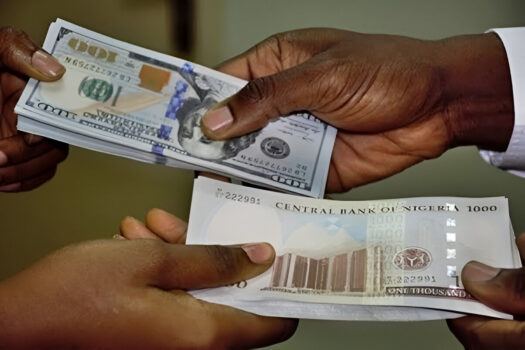
LAGOS, Nigeria – The Nigerian naira staged a cautious recovery against the dollar on Wednesday, closing at N1,537.07 at the official Nigerian Foreign Exchange Market (NFEM) following two consecutive days of marginal losses. This modest N0.54 appreciation came as Nigeria’s external reserves achieved a significant milestone, crossing the $41 billion threshold for the first time in over four years.
The surge in Nigeria’s foreign reserves to $41.22 billion as of August 26, 2025, marks the highest level since March 2021. This represents a substantial $4.53 billion year-on-year increase of 12.42 percent compared to $36.47 billion recorded on the same date in 2024.
Data analyst Babajide Ogunsanwo attributes this remarkable recovery to three interconnected factors: improved pipeline security, higher crude oil production, and increased Central Bank of Nigeria gross external reserves. Nigerian National Petroleum Company Limited (NNPCL) CEO Bashir Ojulari confirmed that pipeline and terminal crude oil receipts have reached “close to 100%” from previous lows of 20-30%, thanks to enhanced security collaboration with military and intelligence services.
This improved security infrastructure has enabled Nigeria’s average daily crude oil exports to surpass one million barrels per day since January 2025, reversing a four-year period where exports remained below this critical threshold. The recovery in measured receipts directly supports Nigeria’s fiscal outlook, with the 2025 federal budget projecting oil production at 2.06 million barrels per day at $75 per barrel.
Foreign Investment Momentum Returns
Foreign portfolio investment activity has surged dramatically, with total inflows reaching $3.8 billion in July 2025, a 24 percent month-on-month increase from June’s $3.1 billion. Foreign Portfolio Investments now account for approximately 45 percent of total inflows, with offshore investor inflows rising to $1.7 billion in July from $1.5 billion in June.
This renewed investor appetite reflects attractive carry trade opportunities amid relatively stable global macroeconomic conditions. FBNQuest analysis indicates that while July’s inflows remained below May’s peak of $6.7 billion, the recovery signals cautious restoration of foreign investor confidence. The cumulative seven-month foreign portfolio transactions have reached N1.28 trillion, more than doubling the N598 billion recorded in the same period of 2024.
Social media discussions across platforms including Twitter, YouTube, and TikTok have largely celebrated the reserves milestone, with content creators and financial analysts highlighting the achievement as a positive development for Nigeria’s economic stability. The improved market sentiment has been reinforced by the Central Bank’s consistent intervention strategies and the narrowing gap between official and parallel market rates.
The naira’s recovery trajectory, supported by strengthening external buffers and improved oil sector performance, positions Nigeria’s currency market for continued stability as foreign investor confidence gradually returns to Africa’s largest economy.