


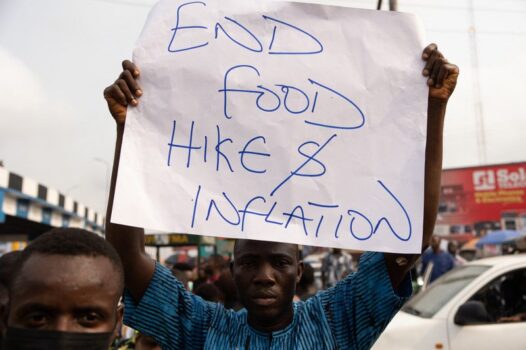
Nigeria’s 2025 budget tells a devastating story that every family in Lagos, Abuja, and beyond is living daily: when your government allocates 54% of its ₦54.99 trillion budget to debt servicing and salaries, leaving crumbs for actual development, ordinary citizens must become financial wizards just to survive. What started as an ambitious “Budget of Restoration” has become a harsh lesson in self-reliance for 230 million Nigerians who are discovering that when your leaders can’t budget, you better learn fast.
The numbers are staggering and sobering. Nigeria’s government plans to spend ₦14.32 trillion on debt servicing and another ₦13.64 trillion on salaries and operational costs, consuming more than half of the entire national budget. Meanwhile, families in Lagos are watching their rent spike from ₦500,000 to ₦1.2 million, and parents in Abuja are breaking down at PTA meetings because they can only afford to give their children carbohydrates for lunch. The cruel irony? A government drowning in debt is teaching its citizens masterful lessons in financial survival.
The crisis has hit Nigeria’s major cities with devastating precision. In Lagos, where over 20 million people call home, housing costs have spiraled completely out of control, with some areas seeing 120% rent increases. The economic hub that once represented opportunity now symbolizes impossible choices. Benson Ehime from Ilamoshe Estate watched his rent jump from ₦900,000 to ₦1.5 million, forcing his family to sell their car just to secure housing.
Port Harcourt residents face equally crushing realities, with two-bedroom apartments now costing ₦2-3.5 million annually, while in Abuja, a four-bedroom duplex commands ₦15 million. These aren’t just statistics – they represent millions of families making impossible mathematics work, stretching incomes that haven’t grown to cover expenses that have doubled or tripled.
The social media response has been a fascinating blend of despair, creativity, and dark humor. Across Twitter/X, Nigerian users share photos of empty plates with captions like “Dinner is served,” while TikTok videos showcase ingenious cooking hacks for surviving on minimal budgets. YouTube channels dedicated to “survival cooking” are gaining massive followings, with creators sharing recipes that stretch ₦500 into a family meal.
But perhaps the most telling social media trend is the explosion of financial literacy content. Nigerian influencers are pivoting from lifestyle content to budget tutorials, teaching audiences how to create emergency funds when earning minimum wage and how to invest small amounts in inflation-resistant assets. The hashtag #BudgetingInNigeria has become a survival guide, with thousands sharing tips on everything from bulk buying strategies to creative income generation.
When Government Budgets Fail, Families Must Innovate
Nigerian families are responding to their government’s fiscal irresponsibility with remarkable innovation and resilience that puts professional financial advisors to shame. While the International Monetary Fund warns that Nigeria must urgently revise its budget to avoid deepening crisis, families have already implemented their own structural adjustments.
The creativity is astounding. In Lagos suburbs, community savings groups have evolved into sophisticated financial cooperatives, with members pooling resources for bulk purchases that reduce individual costs by up to 30%. WhatsApp groups dedicated to “budget accountability” have become digital support systems where members share daily spending updates and celebrate small victories like staying under their weekly food budget.
Urban farming has exploded across Nigerian cities, with rooftop gardens and balcony vegetable patches becoming symbols of food security independence. Community gardens are sprouting in neighborhoods where residents share costs for seeds, tools, and knowledge, creating micro-economies that bypass expensive food markets entirely.
The rental crisis has sparked equally creative solutions. House-sharing among professionals has become normalized, with apps connecting strangers willing to split astronomical rent costs. Some Lagos residents have pioneered “rotation housing,” where groups of friends maintain multiple shared apartments and rotate occupancy to reduce individual housing costs by 60%.
Digital entrepreneurship has become the ultimate escape route. Nigerian youth are switching to digital skills in unprecedented numbers, with young people earning $1,000-$4,000 monthly from remote freelance work while their government jobs pay ₦70,000. The irony is palpable: while Nigeria’s budget assumes its citizens will remain economically dependent, those same citizens are building globally competitive skills that make them financially independent.
Transportation costs have forced revolutionary thinking about mobility. Car-sharing cooperatives, informal ride-sharing networks, and strategic remote work arrangements have reduced transportation expenses for many urban families. Some Lagos professionals have relocated to satellite towns with 50% lower living costs, commuting only 2-3 days weekly and working remotely otherwise.
The most inspiring adaptation has been in education financing. With school fees becoming unaffordable, parents have formed educational cooperatives, hiring qualified teachers for small groups of children at fraction of private school costs. Online learning platforms have exploded in popularity, with families investing in shared internet plans and devices to access quality education at sustainable prices.
Social Media Becomes Nigeria’s Financial Lifeline and Support System
Social media platforms have evolved far beyond entertainment for Nigerian families – they’ve become essential infrastructure for financial survival, knowledge sharing, and community building that the government has failed to provide. The transformation is remarkable: platforms originally designed for social connection are now functioning as financial institutions, educational systems, and support networks.
Instagram has become Nigeria’s unofficial financial advisor, with influencers sharing detailed budget breakdowns, investment strategies, and survival tips tailored to local economic realities. Money management content creators regularly post about protecting savings during inflation, with practical advice on diversifying into assets that hedge against currency devaluation. These creators have built massive followings by addressing the financial questions that traditional institutions ignore.
TikTok videos showcasing “₦500 dinner challenges” and “weekly food budget transformations” have millions of views, creating communities around financial resourcefulness rather than consumerism. Young Nigerians are building entire personal brands around frugal living, budget cooking, and creative income generation, turning financial constraint into content opportunity.
Facebook groups dedicated to budget living, savings challenges, and investment clubs have become powerful community organizing tools. Groups like “Lagos Budget Living” and “Abuja Survival Tips” have hundreds of thousands of members sharing everything from market price updates to group buying opportunities. These platforms have democratized financial information that was previously accessible only to the wealthy.
The psychological impact cannot be overstated. Social media has transformed financial struggle from isolating shame into shared experience and collective problem-solving. Parents posting about feeding children balanced diets on tight budgets receive hundreds of supportive comments with practical suggestions, creating virtual villages of mutual support.
YouTube has become Nigeria’s alternative to expensive financial advisory services, with channels dedicated to teaching investment basics, explaining insurance options, and providing market analysis in local languages. Content creators are filling educational gaps that formal institutions have ignored, making financial literacy accessible to millions who never had such resources.
Twitter/X serves as real-time economic intelligence, with users sharing price updates from local markets, alerting communities to sales and opportunities, and organizing collective action around economic issues. The platform has become essential infrastructure for economic survival, enabling rapid information sharing that helps families make smarter spending decisions.
Perhaps most importantly, social media has preserved hope and humor during Nigeria’s darkest economic period. Memes about expensive jollof rice and impossible budgets create shared laughter that builds resilience. Success stories of individuals escaping poverty through digital skills or creative entrepreneurship inspire others to keep innovating rather than accepting defeat.
The irony is profound: while Nigeria’s government struggles to manage a ₦54.99 trillion budget effectively, ordinary citizens are using free social media platforms to build sophisticated financial support systems, educational resources, and economic opportunities that surpass anything their leaders have provided.
As Nigeria’s budget crisis deepens, one truth emerges clearly: the creativity, resilience, and innovation of ordinary Nigerians far exceeds the financial management skills of their elected leaders. Social media has become the platform where this brilliance shines, creating hope and practical solutions in an economy designed to crush dreams.
The question now isn’t whether Nigerians can survive their government’s financial incompetence – they’re already proving they can thrive despite it. The question is how long before these grassroots innovations scale into the economic transformation that political leadership has failed to deliver.