


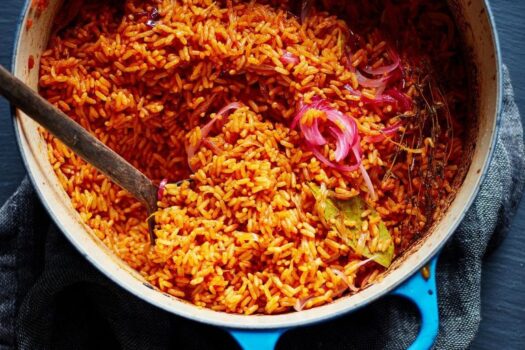
The aroma of perfectly cooked jollof rice has long been the heartbeat of Nigerian celebrations, family gatherings, and everyday meals. But in 2025, this beloved dish has become a luxury that many families can no longer afford. What was once a simple, accessible meal for the average Nigerian household has transformed into an expensive delicacy that costs more than many people’s daily wages.
According to the latest SBM Intelligence Jollof Index, the cost of preparing a single pot of jollof rice for a family of five has skyrocketed from ₦4,087 in 2016 to an eye-watering ₦27,528 by June 2025. In some regions like Bauchi State, the cost has reached an astronomical ₦41,050 per pot. To put this in perspective, at Nigeria’s minimum wage of ₦70,000, preparing one pot of jollof rice now consumes nearly 40% of a worker’s entire monthly salary.
The numbers tell a devastating story, but the real tragedy lies in the human cost. Across social media platforms, Nigerians are sharing their pain with heartbreaking honesty. On Twitter/X, users are posting photos of empty plates with captions like “Dinner is served” – a bitter commentary on the new reality where meals are increasingly scarce. YouTube channels are flooded with videos of families explaining how they’ve had to skip meals and reduce portion sizes just to survive.
The crisis has hit hardest in Nigeria’s major cities. In Lagos, particularly at the bustling Balogun Market, traders report that a pot of jollof rice now costs over ₦23,000 to prepare. Meanwhile, in Abuja’s Wuse Market, the situation is even more dire, with costs exceeding ₦33,000 in the Nyanya and Wuse II districts. Port Harcourt has seen a staggering 55% price increase within just six months, making it one of the worst-affected regions in the country.
From Celebration Staple to Unaffordable Luxury
The transformation of jollof rice from everyday sustenance to luxury item represents more than just economic hardship – it’s a cultural catastrophe. This isn’t merely about rising food costs; it’s about the erosion of Nigerian identity itself. Jollof rice has been the centerpiece of celebrations for generations, the dish that brings families together during holidays, weddings, and religious festivals.
But the ingredients that make jollof rice so special have become prohibitively expensive. Turkey, once an affordable protein option at ₦1,500-₦1,700 per kilogram in 2016, now costs between ₦8,000-₦10,500 – a 500% increase that has pushed this essential ingredient out of reach for most families. The situation is equally dire for other key components: tomatoes and pepper prices have surged by over 300%, while rice itself has doubled in price, with a 50kg bag now costing between ₦75,000-₦99,000 depending on the location.
The reasons behind this crisis are complex and interconnected. The removal of fuel subsidies in 2023 sent shockwaves through the food supply chain, dramatically increasing transportation costs. Currency devaluation has made imported ingredients more expensive, while persistent insecurity in food-producing regions has disrupted agricultural activities and forced farmers to abandon their land.
Perhaps most tragically, these aren’t just statistics – they represent millions of Nigerian families making impossible choices. Social media is filled with testimonies of parents skipping meals so their children can eat, of families replacing meat with cheaper alternatives, or eliminating it entirely. The psychological toll is evident in the growing number of posts where Nigerians express feelings of hopelessness and desperation about their country’s future.
Yet even in this darkness, there are glimmers of hope and resilience that showcase the indomitable Nigerian spirit.
Creative Solutions: How Nigerians Are Fighting Back
While government policies struggle to address the root causes, ordinary Nigerians are developing innovative survival strategies that highlight their remarkable adaptability and resilience. Across the country, families are embracing creative alternatives that maintain the essence of their beloved meals while adapting to economic realities.
One of the most promising trends is the emergence of urban farming initiatives. In Lagos and Abuja, resourceful residents are transforming rooftops, vacant lots, and even apartment balconies into productive gardens. These micro-farms are producing vegetables, herbs, and even small-scale protein sources that help offset grocery costs. Community gardens are sprouting in neighborhoods across Nigeria, where residents pool resources to grow tomatoes, peppers, and onions – the key ingredients that have become so expensive in traditional markets.
Social media has become an unexpected ally in this fight for food security. YouTube channels dedicated to budget cooking are gaining massive followings, with content creators sharing recipes for “jollof alternatives” using bulgur wheat instead of rice, or demonstrating how to create flavorful meals with minimal ingredients. These channels aren’t just sharing recipes; they’re creating communities of support where Nigerians share tips on bulk buying, food preservation, and creative substitutions.
The phenomenon of “substitute jollof” has emerged as a cultural adaptation. Families are experimenting with yam, sweet potato, or even pasta as rice substitutes, maintaining the beloved tomato-based sauce that gives jollof its distinctive flavor while significantly reducing costs. Some innovative cooks have created “protein-free jollof” versions that rely on mushrooms, beans, or groundnuts for substance, proving that the essence of the dish can survive even when traditional ingredients become unaffordable.
Community support networks have also strengthened in response to the crisis. WhatsApp groups dedicated to bulk buying are helping families achieve economies of scale, while neighborhood cooperatives are organizing group purchases of expensive ingredients that individual families can no longer afford. Churches, mosques, and community centers have established food-sharing programs where families contribute what they can to communal cooking efforts.
But perhaps the most powerful response has been the way Nigerians are using humor and creativity to cope with their circumstances. Memes about expensive jollof rice flood social media, transforming pain into shared laughter. TikTok videos show creative cooking hacks, while Instagram posts celebrate “victory meals” – simple dishes prepared with whatever ingredients families can afford.
The Nigerian government has attempted various interventions, from subsidized rice distribution to zero-duty policies on food imports, but these measures have proven insufficient against the magnitude of the crisis. Critics argue that sustainable solutions require addressing root causes: improving security in food-producing regions, investing in agricultural infrastructure, and stabilizing the currency.
Looking Forward: The Path to Food Security
As Nigeria grapples with this unprecedented food crisis, the jollof rice index has become more than just an economic indicator – it’s a symbol of national resilience and adaptation. While the path forward remains challenging, the creative responses emerging from communities across the country offer hope that Nigerians will find ways to preserve their culinary heritage even in the face of economic hardship.
The crisis has sparked important conversations about food sovereignty, sustainable agriculture, and the need for more resilient local food systems. Urban farming initiatives, community cooperatives, and innovative cooking solutions represent the seeds of a potentially more sustainable food future for Nigeria.
However, the human cost remains severe. For millions of Nigerian families, the simple pleasure of sharing a pot of jollof rice has become an impossible dream. The question now is whether Nigeria’s leaders will rise to meet this challenge with the same creativity and determination that ordinary citizens have shown in their daily struggle for survival.
The story of Nigeria’s jollof rice crisis is still being written, but one thing is certain: the resilience and ingenuity of the Nigerian people ensure that while the price may have changed dramatically, the spirit that makes this dish special – the ability to bring people together and create joy even in difficult times – remains unbroken.