


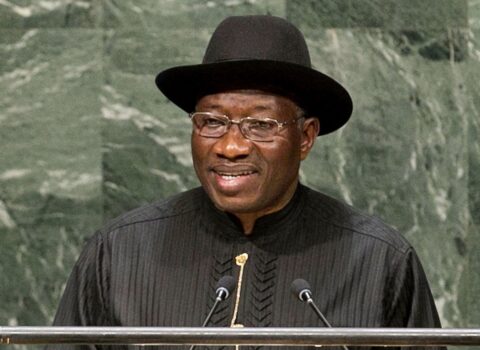
Nigeria finds itself at a fascinating political crossroads as speculation intensifies around former President Goodluck Jonathan’s potential return to the presidential race in 2027. What began as whispered conversations in political circles has erupted into a full-blown national debate, splitting legal experts, political analysts, and citizens across the country. This isn’t just about one man’s political ambitions—it’s about constitutional interpretation, democratic principles, and whether Nigeria is ready to revisit its past to secure its future.
The momentum behind the “Bring Back Our Goodluck” movement has grown remarkably strong, particularly in Northern Nigeria, where political stakeholders are actively courting the former president. Recent rallies in Maiduguri, Kano, and other northern cities have seen hundreds of supporters calling for Jonathan’s return, citing his reputation as a unifying leader who prioritized peace over power. Yet beneath this groundswell of support lies a constitutional minefield that could derail any comeback before it begins.
The Constitutional Battle: Section 137(3) Under the Microscope
At the heart of the Jonathan 2027 debate lies Section 137(3) of Nigeria’s 1999 Constitution, introduced through the Fourth Alteration Act of 2017, which came into force in 2018. This provision states that “a person who was sworn-in as President to complete the term for which another person was elected as President shall not be elected to such office for more than a single term”.
The timing and implications of this amendment have sparked fierce legal arguments. Jonathan was sworn in as acting president in February 2010 following President Umaru Yar’Adua’s prolonged illness, serving for over a year before winning his own presidential term in 2011. Critics argue that since the constitutional amendment wasn’t retroactive, it shouldn’t apply to Jonathan’s situation, while others contend that any future candidacy would be subject to current constitutional provisions.
Professor Chidi Odinkalu, a prominent human rights lawyer, has been particularly vocal about the constitutional barriers facing Jonathan. In a detailed analysis, Odinkalu warned that any attempt by Jonathan to contest in 2027 would face inevitable judicial scrutiny, noting that “the judicial landscape he left in 2015 is radically different from what he will confront should he choose to throw his hat into the ring 12 years later”. Odinkalu predicts that legal challenges would emerge, potentially resulting in court orders that could remove Jonathan from the ballot just weeks before the election.
However, Jonathan’s supporters, including his cousin and lawyer Robert Azibaola, have pushed back strongly against these constitutional concerns. In a heated Facebook exchange with both Festus Keyamo and Odinkalu, Azibaola declared that “GEJ is 100% constitutionally and legally qualified to contest if he chooses to”. Azibaola emphasized that there are existing court judgments that support Jonathan’s eligibility, though the specific cases weren’t detailed in his public statements.
The most intriguing aspect of the Jonathan 2027 movement is its strong northern backing—a remarkable development considering that Jonathan, a southern Christian, was defeated in 2015 partly due to northern opposition. Political analysts suggest this support stems from strategic calculations rather than mere political nostalgia.
Northern leaders see Jonathan as an appealing candidate for several reasons. First, his constitutional limitation to just one term (whether due to Section 137(3) or political agreement) means power would return to the North by 2031, satisfying the unofficial rotational arrangement between Nigeria’s regions. Secondly, there’s widespread dissatisfaction with President Bola Tinubu’s administration, particularly regarding economic policies and perceived marginalization of northern interests.
Governor Bala Mohammed of Bauchi State epitomized this northern sentiment when he declared: “I have always said that as long as Jonathan is around, I will not present myself for leadership of this country, unless he decides not to run. If we can persuade him to come forward, I will support him with my blood”. Such strong endorsements from northern governors signal a significant shift in regional political calculations.
The “Bring Back Our Goodluck” movement has gained particular momentum following Nigeria’s recent economic protests, which were largely peaceful in the South but violent in some northern states. These demonstrations highlighted deep frustrations with current governance, creating an opening for alternative political narratives.
Economic Nostalgia Meets Current Reality
Nigeria’s current economic challenges have created an unexpected nostalgia for the Jonathan years, despite the significant criticisms his administration faced regarding corruption and security. Under President Tinubu’s administration, inflation has surged to levels not seen in nearly two decades, reaching 34.8% by the end of 2024. The removal of fuel subsidies, currency devaluation, and rising electricity tariffs have created what human rights organizations describe as the worst cost-of-living crisis in nearly 30 years.
These economic hardships have led some Nigerians to reassess Jonathan’s tenure more favorably. Supporters point to relatively stable fuel prices during his presidency—when a bag of rice cost around N7,800 compared to N80,000-N100,000 today. They also highlight his youth empowerment programs like YouWin! and SURE-P, which provided opportunities that seem absent under current leadership.
However, critics like activist Aisha Yesufu, co-founder of the #BringBackOurGirls movement, strongly dispute this romanticized view of the Jonathan era. Yesufu argues that “Nigeria was a disaster under Jonathan,” citing his administration’s handling of security challenges, particularly the Chibok girls kidnapping and other Boko Haram atrocities. She emphasizes that while subsequent administrations have performed poorly, this doesn’t validate Jonathan’s previous record.
Social Media and the Information Wars
The Jonathan 2027 narrative has been significantly shaped by social media platforms, where both genuine support and misinformation flourish. AI-generated images showing Jonathan meeting with Donald Trump have circulated widely, complete with fabricated quotes about his 2027 ambitions. These manipulated visuals have been shared thousands of times across Facebook, Instagram, and X (formerly Twitter), demonstrating how artificial intelligence is being weaponized in Nigerian political discourse.
On TikTok and YouTube, content creators have produced hundreds of videos analyzing Jonathan’s potential candidacy, with hashtags like #Jonathan2027 and #BringBackOurGoodluck trending intermittently. The conversations range from serious constitutional analysis to emotional appeals about Nigeria’s current challenges. Interestingly, much of the pro-Jonathan content emerges from northern Nigeria, reversing the regional dynamics of 2015 when southern support couldn’t overcome northern opposition.
However, Jonathan himself has remained remarkably silent about his political intentions. His spokesperson, Ikechukwu Eze, has denied that the former president operates any Instagram accounts, distancing him from much of the online speculation. This strategic ambiguity has only fueled more speculation and allowed various groups to project their hopes onto his potential candidacy.
Despite the constitutional clouds hanging over any potential Jonathan candidacy, the political calculations continue to evolve. The Peoples Democratic Party (PDP) has officially zoned its 2027 presidential ticket to the South, clearing a potential path for Jonathan’s return. Party officials have been reportedly traveling to meet with Jonathan, seeking to convince him to accept the party’s nomination.
Yet significant obstacles remain beyond constitutional challenges. Minister Nyesom Wike has publicly opposed bringing either Jonathan or Peter Obi back to the PDP, arguing that such moves could “create problems for the party”. These internal party divisions reflect broader disagreements about the party’s direction and strategy for challenging the ruling All Progressives Congress (APC).
The APC, for its part, has dismissed Jonathan’s potential candidacy as politically motivated nostalgia. Lagos APC spokesperson Seye Oladejo argued that “legacies are not manifestoes, and nostalgia is not governance,” while warning that Jonathan’s return could trigger “constitutional crisis and political instability”.
The international community watches these developments with keen interest, given Jonathan’s reputation as a democratic elder statesman who peacefully conceded defeat in 2015. His post-presidential role in various international democracy and conflict resolution initiatives has enhanced his global standing, potentially adding gravitas to any domestic political comeback.
Conclusion: Democracy’s Test
The Jonathan 2027 debate represents more than just political maneuvering—it’s a stress test of Nigeria’s democratic institutions and constitutional framework. Whether the former president ultimately decides to run or not, the conversation has revealed deep fault lines in Nigerian politics: the tension between constitutional provisions and political expediency, the persistent influence of regional calculations on national politics, and the complex relationship between democratic legitimacy and popular will.
As Nigeria approaches what could be a defining election cycle, the resolution of the Jonathan question will likely influence broader discussions about term limits, political succession, and democratic governance across Africa. The constitutional challenges facing any Jonathan candidacy may ultimately prove insurmountable, but the political energy surrounding his potential return reflects genuine dissatisfaction with current leadership and a yearning for alternatives.
The coming months will reveal whether this is merely political theater or the beginning of a genuine constitutional crisis. What remains certain is that the Jonathan 2027 debate has already reshaped Nigerian political discourse, forcing difficult conversations about democracy, legitimacy, and leadership that the country cannot afford to ignore. Whether this ends in comeback or constitutional crisis may depend less on legal technicalities and more on the political will of key stakeholders to prioritize democratic principles over partisan advantage.