


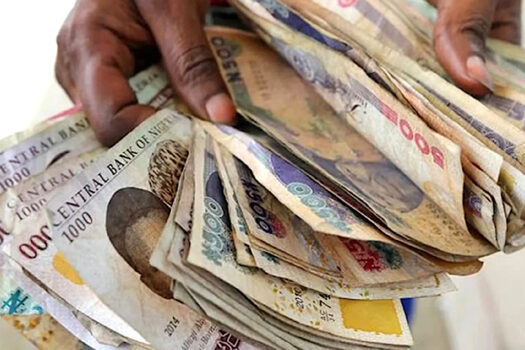
Lagos, Nigeria – The Nigerian naira has surged to its strongest position in six months, closing at N1,514.86 per dollar on Thursday in the official foreign exchange market, marking a dramatic turnaround that has ignited celebrations across social media platforms and renewed optimism among investors in Africa’s largest economy.
This milestone represents the naira’s best performance since March 6, 2025, when it last traded at N1,512.30 per dollar, capping off what analysts describe as a remarkable recovery story driven by improved liquidity and swelling external reserves that now stand at $41.30 billion. The strengthening comes amid sustained policy reforms by the Central Bank of Nigeria under Governor Olayemi Cardoso, whose interventions have injected over $4.1 billion into the foreign exchange market in the first half of 2025 alone.
The currency’s resilience has been particularly evident in the narrowing gap between official and parallel market rates, with black market rates holding steady at N1,535 per dollar while the official market continues to strengthen. This convergence signals improved confidence in Nigeria’s foreign exchange system and validates the CBN’s market-driven reforms that have attracted $4.9 billion in foreign portfolio investments this year.
Social Media Erupts: From Skepticism to Celebration
Across Nigerian social media platforms, the naira’s performance has triggered a wave of commentary that reflects both cautious optimism and analytical scrutiny. YouTube financial analysts like those on News Central TV have been particularly vocal, with expert discussions highlighting how “improved dollar liquidity and a narrowing exchange rate gap” represent fundamental shifts in Nigeria’s monetary landscape.
Lagos-based financial commentator Fisayo Fosudo’s analysis of Nigeria’s exchange rate unification has garnered hundreds of thousands of views, with users praising the educational content that explains complex monetary policies in accessible terms. His breakdown of how market forces now determine currency values has become a reference point for many Nigerians trying to understand the implications of the naira’s recent strength.
Instagram accounts of major financial institutions have been particularly active in celebrating the milestone. The Nigerian Exchange Group’s official account has seen increased engagement as investors share positive sentiment about the currency’s trajectory. Similarly, Money Africa’s Instagram page has been flooded with comments from users expressing newfound confidence in naira-denominated investments.
However, the social media narrative isn’t uniformly positive. Some Twitter users express skepticism about sustainability, questioning whether the CBN’s aggressive interventions – totaling $4.1 billion in H1 2025 compared to just $1.3 billion in the same period last year – represent a viable long-term strategy. “No responsible central bank would allow market forces to solely determine currency value,” argues one prominent financial Twitter account, defending the intervention strategy while acknowledging concerns about reserve depletion.
TikTok and Instagram stories from young Nigerian traders reveal a more nuanced perspective, with many celebrating the naira’s strength while remaining cautious about import costs and international transaction fees. The generational divide is particularly evident, with older users on Facebook groups expressing relief that their savings are gaining value, while younger users worry about the impact on tech subscriptions and international services.
Economic Fundamentals Drive the Recovery
The naira’s ascent to N1,514.86 reflects a convergence of positive economic indicators that extend far beyond mere speculation or temporary market sentiment. Nigeria’s current account has shifted decisively into surplus territory, with the country’s trade balance benefiting from both reduced import pressures and improved non-oil export performance.
Central Bank data reveals that autonomous FX inflows surged to $20.7 billion in Q1 2025, the highest level since the COVID-19 pandemic, driven primarily by carry trade flows attracted by Nigeria’s high interest rate environment. These flows have been complemented by foreign portfolio investments that rose 40% quarter-on-quarter and 101% year-on-year to $4.9 billion.
The sustainability question remains paramount, however. External debt service payments increased 29% year-on-year to $1.4 billion, while autonomous FX outflows rose sharply by 125% quarter-on-quarter to $3.2 billion. This dynamic creates what economists describe as a delicate balancing act between attracting capital through high returns and managing the fiscal costs of maintaining those policies.
Nigeria’s external reserves now provide approximately 10 months of import coverage, a significant improvement from previous years that offers a more robust buffer against external shocks. The CBN’s Net Foreign Exchange Reserves (NFER) stood at $23.11 billion at end-2024, the highest level in over three years, after adjusting for near-term liabilities such as FX swaps and forward contracts.
Market analysts at Chapel Hill Denham suggest the naira’s fair value should be around N1,250 per dollar, indicating the currency remains undervalued despite recent gains. This assessment provides room for further appreciation if current policy trajectories continue and external conditions remain favorable.
The broader implications extend to Nigeria’s fiscal position, where a competitive exchange rate has historically supported government revenues from oil and gas royalties, customs duties, and corporate taxes paid in dollars. Budget Office data shows the naira strengthened by 15.28% over five months to August 2025, equivalent to an annualized pace of nearly 49%.