


LAGOS, Nigeria – Nigeria’s benchmark interest rate stands 8.94 percentage points above headline inflation after the Central Bank of Nigeria kept the Monetary Policy Rate at 23% on November 24, 2026, with inflation at 14.06% in October.
The gap is the simplest measure of how tight monetary policy is. It has widened since September, when the rate was cut to 23% and inflation was 14.63%, a difference of 8.37 points. It is narrower than in August, when the rate was 26.5% and inflation was 15.39%, a difference of 11.11 points. Measured against core inflation of 10.78% in October, the policy rate is 12.22 points higher. Measured against food inflation of 19.13%, it is 3.87 points higher.
How the rate moved in 2026
The Monetary Policy Committee lowered the rate by 400 basis points during the year. It cut by 50 basis points from 27% in February, held at 26.5% in May and July and cut by 350 basis points in September, according to Premium Times and the News Agency of Nigeria. The November decision, taken at the 308th meeting, was the first hold since that cut.
The committee left the cash reserve requirement at 45% for deposit money banks. Under that rule, N45 of every N100 in customer deposits at a commercial bank is held at the central bank and cannot be lent. The requirement is 16% for merchant banks and 75% for public sector deposits outside the Treasury Single Account.
In its communique, the committee said inflation had slowed for 5 consecutive months and that it held the rate to keep that trend in place. It named the Middle East conflict, festive spending and election-related spending as risks to prices. BusinessDay reported that the governor, Olayemi Cardoso, said interbank rates had moved towards the lower end of the policy corridor, rates on Treasury bills had eased and credit to the private sector was recovering gradually, while the cost of credit remained a concern.
What analysts said
Ayodeji Ebo, chief executive of MDU Capital, told BusinessDay that holding at 23% gave the committee time to confirm the slowdown in inflation, but that households would continue to face expensive loans and that unchanged reserve requirements left banks little room to lend. He said further moderation in inflation and a stable naira could allow gradual cuts. Razia Khan of Standard Chartered Bank said the hold was largely expected and that further easing was possible if conditions allowed.
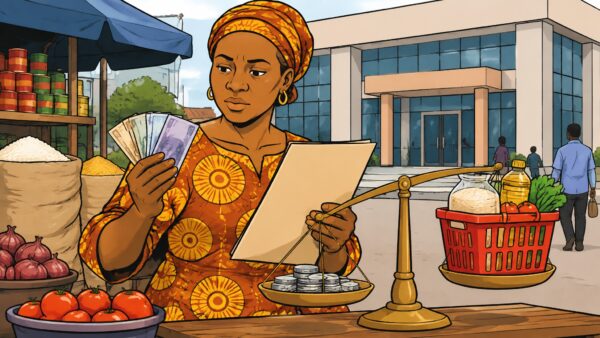
For a trader or small business owner, the figures mean the benchmark behind loan pricing will not fall again in 2026, and the share of deposits that banks can lend is unchanged. For a salary earner, food prices are still rising faster than the headline rate. For a saver, the policy rate is above headline inflation, although the returns paid on deposits and Treasury bills differ from the policy rate and the governor said market rates had eased.
The committee meets next on February 22 and 23, 2027. The National Bureau of Statistics is due to publish inflation figures for November in December, the first reading since the decision.
Sources
Central Bank of Nigeria, Monetary Policy Communique No. 165, November 24, 2026
BusinessDay, November 25, 2026