


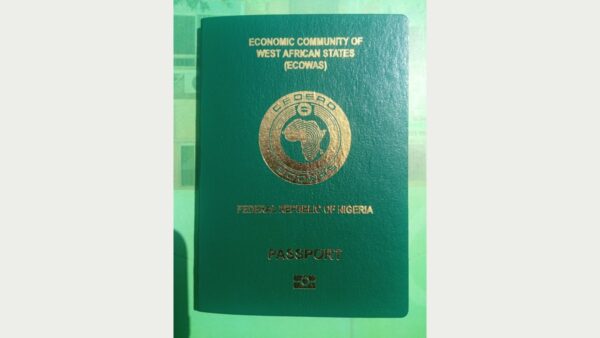

A Nigerian applying at home can use ₦100,000 as the starting budget for a 32-page, five-year standard passport, or ₦200,000 for the 64-page, ten-year option where eligible. An ordinary renewal carries the same published booklet fee as a fresh application. The figures come from the Nigeria Immigration Service fee notice and its 2026 service agreement, reviewed by Financial Watch on November 26, 2026.
For a 2027 trip, the difference between those two amounts is only one part of the decision. A family needs to multiply the fee by the number of people applying. A worker who has to travel for enrolment needs to budget for the trip. Someone with inconsistent details across their records may need a different service. Here is how to work out which figure applies before making a payment.
Standard passport booklet fees
| Where you apply | 32 pages, five years | 64 pages, ten years |
|---|---|---|
| Within Nigeria | ₦100,000 | ₦200,000 |
| Outside Nigeria, NIS published diaspora fee | US$150 | US$230 |
The domestic rates took effect on September 1, 2025 and also appear in the 2026 service agreement. That agreement excludes bank charges. The overseas figures are the NIS standard booklet fees quoted in its notice. Check your Nigerian mission’s instructions for the amount payable through its channel, local service arrangements and any separately itemised charges. Recheck the official portal for a revision before paying in 2027.
Which booklet makes sense for your travel?
For an eligible adult applying in Nigeria, the basic arithmetic is unusually neat. ₦100,000 over five years and ₦200,000 over ten years both work out at ₦20,000 per year of stated validity. The larger booklet ties up another ₦100,000 today. In return it gives you more pages and, if it lasts the full term, one fewer renewal appointment over ten years. Someone applying for a single trip may prefer to keep the extra cash. Someone who needs visas and entry stamps regularly should consider how quickly the booklet will fill.
For an overseas applicant, the price relationship is different. The ten-year booklet costs US$80 more than the five-year booklet at the published rates. Two successive five-year booklets at today’s fee would cost US$300, compared with US$230 for one ten-year booklet. That US$70 difference is a planning comparison. It assumes the applicant qualifies, uses the full validity and that fees stay the same.
A family budget you can adjust
Take two eligible adults and two children applying in Nigeria. If all four choose 32-page booklets, the government booklet fees total ₦400,000. If the adults choose the ten-year option and the children use the five-year booklets, the total is ₦600,000. The difference is ₦200,000 before bank charges, photos, printing or travel to the enrolment centre.
Put each family member on a separate line with the spelling of their name, date of birth, chosen booklet and application reference. Then add actual shared costs, such as transport to the centre, once. If appointment dates differ, allow for a second trip. This gives a family a more realistic target than multiplying one person’s total bill by four.
First application, renewal or correction?
The official portal has separate routes for a fresh passport, renewal or reissue, and correction of data. For a standard first application, NIS lists a NIN slip, birth certificate or qualifying age declaration, origin documentation and a compliant photograph. Its requirements differ by applicant category. For a minor, read the separate checklist covering the child’s documents and parental permission before booking.
For renewal, have the current passport and a clear copy of its data page ready. Compare the names, dates and spelling on the passport and NIN record before starting. If you need to change existing details, the service agreement lists a ₦30,000 administrative correction charge. Establish which service and supporting records NIS requires in your case. An ordinary renewal does not by itself call for that correction line.
Allow for the appointment as well as processing
The 2026 service agreement gives a target of 42 days after successful enrolment for a fresh application and 21 days after successful enrolment for a standard reissue. A first-time applicant who pays today and enrols two weeks later should count the target from enrolment. Time spent waiting for an appointment is additional. A target also leaves room for a case to take longer.
The domestic portal lets you check the earliest appointment at a centre and test whether the photo uploads successfully. Use both before arranging travel. After paying, save the receipt, appointment slip and reference where you can retrieve them without the phone used to apply. The portal also offers application status checks and receipt printing.
What to verify when someone quotes a higher figure
Ask for a written breakdown showing the booklet type, the official fee, payment charges and any separate service being offered. Compare it with the government portal or the mission where you will enrol. A domestic quote of ₦200,000 could simply be the official ten-year booklet, whereas the same figure for an ordinary five-year booklet needs an explanation. The booklet, application location and service must all match before two prices are comparable.
Replacing a 2019 estimate in your travel budget
The archived Financial Watch guide included older age-banded fees and reported a ₦70,000 announcement ahead of the enhanced passport rollout in 2019. Those figures explain why an old receipt or a family member’s recollection can be far below the fee on today’s application screen. For the ordinary standard booklet, start with the current table for your application location. Then use the live portal to confirm the service you selected.
For someone saving monthly, a domestic five-year booklet alone works out at ₦25,000 a month over four months. The ten-year booklet takes ₦50,000 a month over the same period. Set aside any travel or bank charges separately. If you have a fixed departure date, work backwards from that date to the enrolment appointment as well as the payment deadline. Saving the fee in time is only half the timetable.
Sources and earlier coverage
NIS 2026 service standards and charges (PDF)