Approved $28.2 Billion Borrowing Plan Equals 52% of Nigeria External Debt
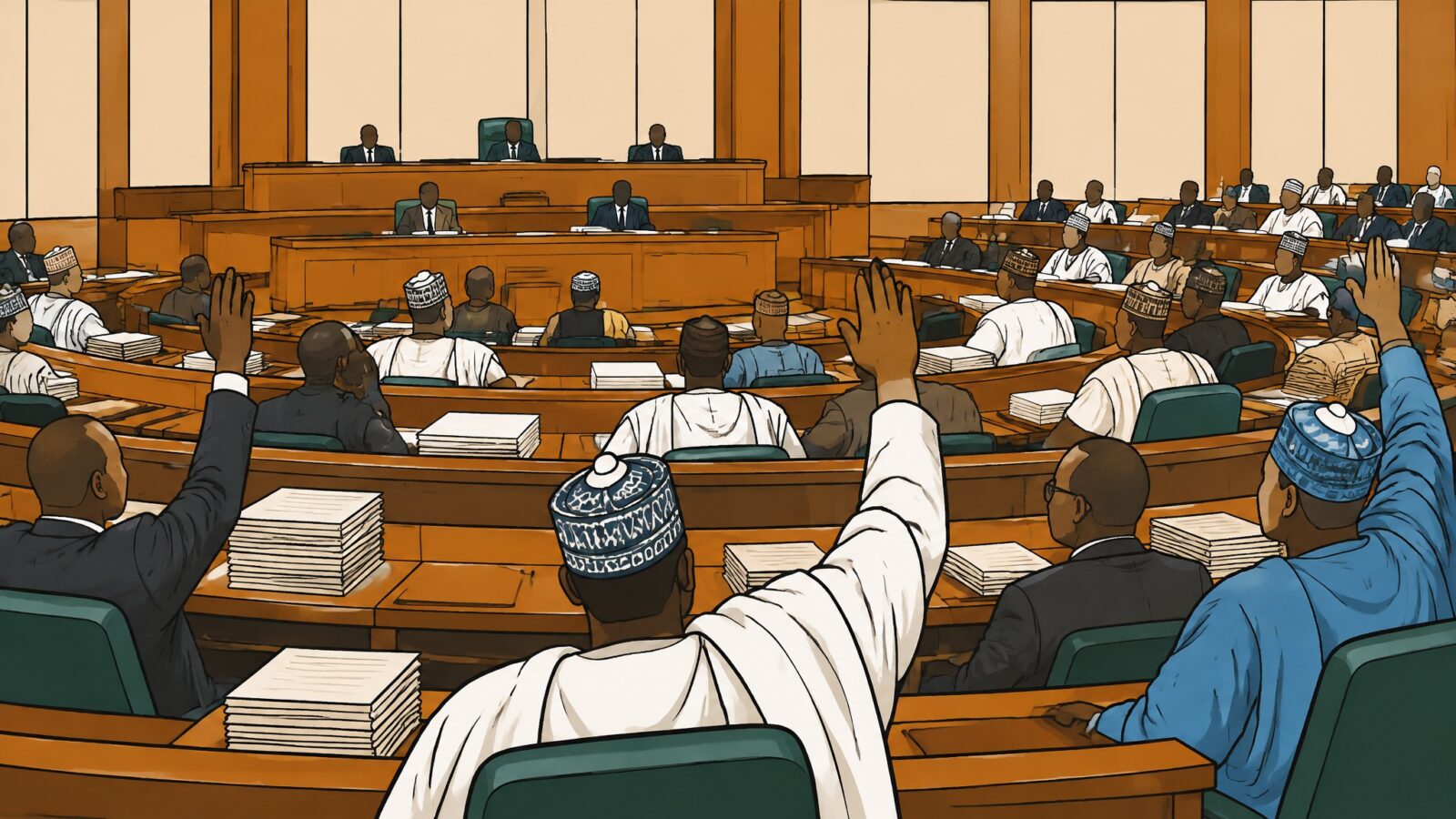
ABUJA, Nigeria – The $28.2 billion in external borrowing that the House of Representatives approved for the Federal Government on Tuesday, November 24, 2026, equals about 52% of Nigeria’s external debt stock of $54.52 billion as of June 30, 2026, a comparison of the approval with Debt Management Office (DMO) figures shows.
The House approved external borrowing of $28,225,160,783.49 and €1,045,083,643 requested by President Bola Tinubu, ThisDay reported. The approval covers 2 requests. The first is the 2026–2027 Supplementary External Borrowing (Rolling) Plan of $20,517,755,901 and €1,045,083,643. The second is a resolution to implement the new external borrowing already provided for in the 2026 Appropriation Act, which is N10,790,366,835,481, or $7,707,404,882.49 at the budget exchange rate of N1,400 per dollar.
What the approval does and does not do
The approval is an authorisation to borrow. It is not a loan that has been signed or disbursed. The government still has to negotiate each facility, and the rolling plan covers 2 years. The debt stock rises only as money is drawn. If the full dollar amount were drawn and nothing were repaid, external debt would move from $54.52 billion to about $82.7 billion.
The DMO put total public debt at N166.79 trillion, or $120.93 billion, as of June 30, 2026. External debt was N75.20 trillion, which was 45.09% of the total, and domestic debt was N91.59 trillion. The DMO converted external debt at the CBN official rate of N1,379.18 per dollar. At that level of debt, every N10 change in the exchange rate changes the naira value of the existing external debt by about N545 billion.
In his letter to the House, Tinubu said the country needed “prudent external borrowing” to close its infrastructure financing gap. He said the money would mainly fund projects in power, transportation, healthcare and other sectors, and that most projects would be carried out across the 36 states and the Federal Capital Territory. For the N10.79 trillion in the 2026 budget, he listed Eurobonds, concessional and commercial loans from multilateral and bilateral lenders, International Monetary Fund facilities, bridge financing and loan syndications as possible sources. He said emphasis would be placed on Eurobonds because they take less time to complete.
Cost depends on the source of the loans
The mix of lenders matters for cost. Concessional loans from multilateral lenders carry lower interest rates and longer repayment periods than Eurobonds and commercial loans. The request does not state how much will come from each source. For comparison, the Federal Government paid a stop rate of 16.60% on 364-day naira Treasury bills at the auction of November 25, Nairametrics reported. Interest rates on dollar loans are generally lower than on naira debt, but the cost of repayment in naira depends on the exchange rate at the time.
For households, the effect is indirect. Loan-funded power and transport projects can lower costs for businesses and commuters if they are completed. Debt service is paid from government revenue, so a larger debt stock leaves less for salaries, schools and hospitals unless revenue grows faster than the cost of servicing the debt.
The House directed the government to seek the most favourable terms. It also directed the DMO to send periodic reports to the National Assembly on each concluded financing arrangement, with the amounts raised, sources, interest rates, repayment periods and fees, ThisDay reported.
Those reports and the DMO’s public debt figures for September 30, 2026, are the next documents that will show how much of the approved amount has been borrowed. The DMO published the June figures on September 25.
Sources
ThisDay: House approves $28.2bn and €1.04bn external borrowing requests, November 26, 2026
TheCable: Debt Management Office public debt figures as of June 30, 2026
Vanguard: breakdown of the June 30, 2026 public debt figures
Nairametrics: Treasury bills auction results for November 25, 2026