
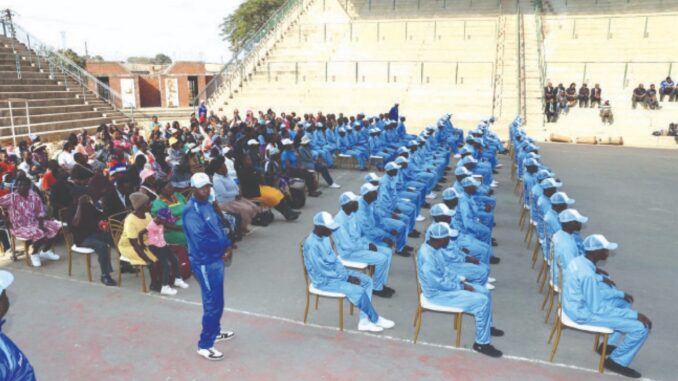

Harare, Zimbabwe – More than 5,000 young Zimbabweans are set to march through the streets of Harare today in an unprecedented demonstration against drug abuse and crime, as the nation grapples with a devastating substance abuse epidemic that has reached crisis proportions.
The march, organized by the Ministry of Youth Empowerment, Development and Vocational Training in partnership with the Zimbabwe Youth Council, will proceed from the iconic Mbuya Nehanda Statue on Samora Machel Avenue through Gamal Abdel Nasser Avenue (formerly Rotten Row) to Mbare township. The event carries the powerful theme “Fuel Youth: Ignite the Future — As We Strive Towards a Crime-Free Zimbabwe”.
First Lady Dr. Auxillia Mnangagwa will lead the procession alongside Cabinet Ministers, provincial leaders, youth organizations, and faith-based groups, with Defence Minister Oppah Muchinguri-Kashiri serving as the guest of honor. This high-level participation underscores the government’s commitment to addressing what has become a national emergency.
Recent statistics paint a stark picture of Zimbabwe’s drug crisis. According to Afrobarometer’s 2025 survey, 79% of Zimbabweans report that drug and substance abuse is widespread in their communities. The crisis has escalated dramatically, with drug abuse rates among young people rising from 43% in 2017 to 57% in 2019. Approximately one in 30 households across the nation is affected by drug abuse, translating to over 533,334 individuals nationwide.
The march route through Mbare is particularly significant, as this historic township has become ground zero for Zimbabwe’s drug epidemic. Mbare, established in 1907 as Zimbabwe’s first designated township, is now characterized by high unemployment, overcrowding, and rampant drug trafficking. The area is home to Zimbabwe’s largest farm produce market but has suffered from neglect and has become synonymous with crime and drug-related violence.
Zimbabwe Youth Council director for public relations and programming Tanzwika Guranungo highlighted the urgent nature of the crisis, stating that there has been “a sharp surge in social ills such as armed robberies, sexual assault, cybercrime, touting, reckless driving, and drug and substance abuse”. The march represents a critical intervention in a battle that extends far beyond individual addiction to threaten the nation’s social fabric and economic future.
Government’s Multi-Pronged Response to National Emergency
President Emmerson Mnangagwa has declared the fight against drug abuse a national priority, launching multiple initiatives to combat what he describes as a threat to “the very soul and future of Zimbabwe”. In July 2025, the President launched a vigorous National Resource Mobilisation Programme aimed at raising over $77 million to support comprehensive anti-drug efforts.
The government’s response includes the establishment of a National Committee on Drug and Substance Abuse operating through seven thematic pillars: supply reduction, demand reduction, harm reduction, treatment and rehabilitation, legal reforms, and public awareness campaigns. A dedicated Drug Enforcement Agency is being established, with legislation currently being finalized.
Recent law enforcement efforts have intensified dramatically. The government has identified 67 centers across the country for conversion into treatment and support facilities, with ZIG 865 million allocated in the 2025 National Budget. Under new legal provisions, emerging illicit substances such as twumba, musombodhiya, and crystal methamphetamine (locally known as mutoriro or guka) now carry stiffer penalties.
The First Lady’s Angel of Hope Foundation has been at the forefront of rehabilitation efforts, operating facilities in Mbare and supporting various community programs. Dr. Mnangagwa has been actively involved in youth empowerment initiatives, conducting school visits across the country to address issues of drug abuse, early marriage, and teenage pregnancy.
Social media reactions to the march have been mixed, with some Zimbabweans expressing skepticism about government-led initiatives while others praise the high-level commitment to addressing the crisis. On platforms like Twitter, Facebook, and TikTok, young Zimbabweans have shared personal stories of addiction and recovery, highlighting both the severity of the problem and the desperate need for effective solutions.
The march represents more than a symbolic gesture – it signals Zimbabwe’s recognition that the drug crisis requires urgent, comprehensive action involving all sectors of society. With youth unemployment at 74% in areas like Chitungwiza and drug-related crimes increasing by 40% between 2021 and 2023, the stakes could not be higher for Zimbabwe’s future.
As the nation watches today’s march unfold through the streets of Harare, the message is clear: Zimbabwe’s young generation is taking a stand against the forces threatening to derail their future, demanding action and accountability from leaders while demonstrating their own commitment to building a drug-free society.

I’ve recently started a website, the info you provide on this website has helped me tremendously. Thanks for all of your time & work.
You have brought up a very good points, regards for the post.
Hello! I could have sworn I’ve been to this blog before but after browsing through some of the post I realized it’s new to me. Anyways, I’m definitely happy I found it and I’ll be book-marking and checking back frequently!
Wow! This could be one particular of the most useful blogs We have ever arrive across on this subject. Actually Wonderful. I am also an expert in this topic therefore I can understand your effort.
hufkfq
Great post. I was checking constantly this blog and I am impressed! Extremely helpful info particularly the last part 🙂 I care for such info much. I was seeking this particular information for a long time. Thank you and good luck.
Spot on with this write-up, I actually assume this website wants rather more consideration. I’ll probably be again to learn way more, thanks for that info.
Absolutely pent written content, Really enjoyed looking at.
Wow, amazing blog layout! How long have you been blogging for? you make blogging look easy. The overall look of your web site is great, let alone the content!
I would like to get across my gratitude for your kind-heartedness supporting people who require guidance on that subject. Your special commitment to passing the message throughout had become rather helpful and have all the time helped employees just like me to arrive at their dreams. Your important suggestions can mean much to me and substantially more to my mates. Thank you; from each one of us.
Some really quality blog posts on this web site, bookmarked.
We’re a gaggle of volunteers and opening a brand new scheme in our community. Your web site offered us with useful information to paintings on. You’ve done a formidable activity and our entire community will probably be grateful to you.
Good day! Do you know if they make any plugins to protect against hackers? I’m kinda paranoid about losing everything I’ve worked hard on. Any recommendations?
When I originally commented I clicked the “Notify me when new comments are added” checkbox and now each time a comment is added I get several emails with the same comment. Is there any way you can remove me from that service? Thanks a lot!
Great site! I am loving it!! Will come back again. I am taking your feeds also
5u7b4g
Hi there would you mind stating which blog platform you’re using? I’m planning to start my own blog in the near future but I’m having a difficult time deciding between BlogEngine/Wordpress/B2evolution and Drupal. The reason I ask is because your layout seems different then most blogs and I’m looking for something unique. P.S Sorry for being off-topic but I had to ask!
F*ckin’ remarkable things here. I’m very glad to see your post. Thanks a lot and i’m looking forward to contact you. Will you kindly drop me a mail?
I’ll right away snatch your rss feed as I can’t to find your e-mail subscription hyperlink or newsletter service. Do you’ve any? Kindly permit me understand so that I could subscribe. Thanks.
What’s Taking place i am new to this, I stumbled upon this I’ve discovered It absolutely useful and it has helped me out loads. I’m hoping to give a contribution & help other users like its aided me. Great job.
Some really good content on this web site, appreciate it for contribution.
Hello! I could have sworn I’ve been to this blog before but after browsing through some of the post I realized it’s new to me. Anyways, I’m definitely happy I found it and I’ll be book-marking and checking back frequently!
Hi my family member! I want to say that this post is amazing, great written and come with approximately all significant infos. I would like to peer more posts like this.
I’m extremely inspired with your writing talents as well as with the structure to your weblog. Is this a paid topic or did you modify it your self? Either way stay up the nice high quality writing, it’s uncommon to look a great blog like this one nowadays..
Sweet internet site, super design and style, really clean and apply genial.
Great work! This is the type of info that should be shared around the net. Shame on the search engines for not positioning this post higher! Come on over and visit my web site . Thanks =)
Its like you read my mind! You seem to know a lot about this, like you wrote the book in it or something. I think that you can do with a few pics to drive the message home a bit, but instead of that, this is great blog. An excellent read. I’ll definitely be back.
I am really enjoying the theme/design of your web site. Do you ever run into any web browser compatibility issues? A number of my blog readers have complained about my website not working correctly in Explorer but looks great in Opera. Do you have any recommendations to help fix this problem?
Good day! I know this is kinda off topic but I’d figured I’d ask. Would you be interested in exchanging links or maybe guest authoring a blog post or vice-versa? My site discusses a lot of the same subjects as yours and I think we could greatly benefit from each other. If you’re interested feel free to send me an email. I look forward to hearing from you! Superb blog by the way!
This website can be a walk-by way of for all of the info you wished about this and didn’t know who to ask. Glimpse right here, and you’ll definitely discover it.
I got what you intend, appreciate it for posting.Woh I am happy to find this website through google. “You must pray that the way be long, full of adventures and experiences.” by Constantine Peter Cavafy.
I conceive you have remarked some very interesting details, appreciate it for the post.
I know this if off topic but I’m looking into starting my own blog and was wondering what all is required to get set up? I’m assuming having a blog like yours would cost a pretty penny? I’m not very web savvy so I’m not 100 sure. Any recommendations or advice would be greatly appreciated. Cheers
When I originally commented I clicked the -Notify me when new comments are added- checkbox and now each time a comment is added I get four emails with the same comment. Is there any way you can remove me from that service? Thanks!
You can certainly see your skills within the work you write. The world hopes for more passionate writers like you who are not afraid to mention how they believe. Always go after your heart. “Until you walk a mile in another man’s moccasins you can’t imagine the smell.” by Robert Byrne.
Hello would you mind stating which blog platform you’re using? I’m going to start my own blog soon but I’m having a hard time deciding between BlogEngine/Wordpress/B2evolution and Drupal. The reason I ask is because your layout seems different then most blogs and I’m looking for something unique. P.S Sorry for being off-topic but I had to ask!
I don’t even know how I ended up here, but I thought this post was great. I don’t know who you are but certainly you are going to a famous blogger if you aren’t already 😉 Cheers!
yf8j22
Great post. I am facing a couple of these problems.
莫离2026 白鹿丞磊 高清古装大女主 海外华人必备 无广告高清体验
I have been examinating out many of your stories and it’s pretty nice stuff. I will definitely bookmark your blog.
It’s actually a great and useful piece of information. I’m glad that you simply shared this useful information with us. Please stay us up to date like this. Thanks for sharing.
I conceive this site contains some real great info for everyone :D.
Hi there, You’ve done an incredible job. I will definitely digg it and personally recommend to my friends. I am confident they’ll be benefited from this website.
I am very happy to read this. This is the type of manual that needs to be given and not the random misinformation that’s at the other blogs. Appreciate your sharing this best doc.
I like the valuable information you provide in your articles. I will bookmark your blog and check again here frequently. I’m quite sure I’ll learn plenty of new stuff right here! Good luck for the next!
There’s noticeably a bundle to know about this. I assume you made certain nice points in options also.
After I originally commented I clicked the -Notify me when new feedback are added- checkbox and now every time a remark is added I get 4 emails with the identical comment. Is there any way you possibly can take away me from that service? Thanks!
I think you have observed some very interesting points, thanks for the post.
Oh my goodness! a tremendous article dude. Thanks However I am experiencing issue with ur rss . Don’t know why Unable to subscribe to it. Is there anyone getting an identical rss drawback? Anyone who is aware of kindly respond. Thnkx
I loved as much as you will receive carried out right here. The sketch is attractive, your authored subject matter stylish. nonetheless, you command get got an edginess over that you wish be delivering the following. unwell unquestionably come more formerly again as exactly the same nearly very often inside case you shield this hike.
It is in point of fact a nice and helpful piece of information. I am happy that you just shared this useful information with us. Please stay us informed like this. Thanks for sharing.
I am really loving the theme/design of your website. Do you ever run into any web browser compatibility problems? A small number of my blog visitors have complained about my blog not operating correctly in Explorer but looks great in Opera. Do you have any ideas to help fix this issue?
I’ve been exploring for a little bit for any high quality articles or weblog posts in this sort of area . Exploring in Yahoo I ultimately stumbled upon this site. Studying this information So i’m happy to show that I’ve an incredibly just right uncanny feeling I discovered just what I needed. I such a lot for sure will make sure to don’t forget this site and give it a look regularly.
I have learn a few excellent stuff here. Definitely price bookmarking for revisiting. I wonder how a lot effort you put to create such a fantastic informative site.
I will right away grab your rss as I can’t to find your email subscription link or e-newsletter service. Do you have any? Kindly permit me recognize in order that I may subscribe. Thanks.
Wow, amazing blog layout! How long have you been blogging for? you make blogging look easy. The overall look of your web site is magnificent, as well as the content!
Thanks , I have just been searching for info about this subject for a long time and yours is the greatest I have discovered so far. However, what concerning the bottom line? Are you positive in regards to the source?
I always was interested in this topic and stock still am, thanks for putting up.
Your point of view caught my eye and was very interesting. Thanks. I have a question for you.
quz3kz
I like this blog its a master peace ! Glad I noticed this on google .
fknxhn
Merely a smiling visitor here to share the love (:, btw outstanding style and design. “Make the most of your regrets… . To regret deeply is to live afresh.” by Henry David Thoreau.
I happen to be writing to make you understand of the amazing encounter my cousin’s child obtained checking your web site. She even learned too many issues, with the inclusion of how it is like to possess an amazing teaching character to let most people without problems know some complex matters. You undoubtedly surpassed our expected results. Many thanks for displaying those useful, trustworthy, explanatory not to mention fun guidance on your topic to Julie.
Heya i’m for the first time here. I came across this board and I find It really useful & it helped me out much. I hope to give something back and aid others like you aided me.
I found your weblog website on google and verify a couple of of your early posts. Continue to maintain up the excellent operate. I just additional up your RSS feed to my MSN News Reader. Looking for ahead to reading extra from you afterward!…
You actually make it appear really easy along with your presentation however I to find this topic to be actually one thing which I believe I would by no means understand. It sort of feels too complex and extremely broad for me. I am looking ahead for your next post, I will try to get the hang of it!
Wonderful goods from you, man. I have understand your stuff previous to and you’re just extremely wonderful. I actually like what you have acquired here, really like what you’re saying and the way in which you say it. You make it enjoyable and you still care for to keep it sensible. I can’t wait to read much more from you. This is actually a tremendous website.
Real wonderful info can be found on web blog.
Howdy would you mind sharing which blog platform you’re working with? I’m going to start my own blog soon but I’m having a tough time selecting between BlogEngine/Wordpress/B2evolution and Drupal. The reason I ask is because your design and style seems different then most blogs and I’m looking for something unique. P.S My apologies for being off-topic but I had to ask!
Thank you for the sensible critique. Me and my neighbor were just preparing to do some research about this. We got a grab a book from our area library but I think I learned more from this post. I’m very glad to see such wonderful info being shared freely out there.
I in addition to my guys were actually looking through the best advice found on your web site then immediately I got a terrible suspicion I never thanked the blog owner for those secrets. My boys are actually consequently stimulated to see all of them and already have truly been using these things. We appreciate you really being quite accommodating and also for considering this kind of brilliant tips most people are really wanting to understand about. My personal sincere apologies for not expressing appreciation to you earlier.
I am usually to blogging and i really admire your content. The article has actually peaks my interest. I am going to bookmark your website and maintain checking for brand new information.
F*ckin’ remarkable issues here. I’m very glad to look your post. Thanks so much and i am looking ahead to contact you. Will you please drop me a e-mail?
Thanks for sharing excellent informations. Your web site is so cool. I’m impressed by the details that you have on this site. It reveals how nicely you perceive this subject. Bookmarked this web page, will come back for more articles. You, my friend, ROCK! I found simply the information I already searched everywhere and just could not come across. What an ideal web site.
Can I just say what a relief to find someone who actually knows what theyre talking about on the internet. You definitely know how to bring an issue to light and make it important. More people need to read this and understand this side of the story. I cant believe youre not more popular because you definitely have the gift.
Hiya, I’m really glad I have found this information. Nowadays bloggers publish only about gossips and internet and this is really annoying. A good site with exciting content, that’s what I need. Thanks for keeping this site, I’ll be visiting it. Do you do newsletters? Can not find it.
Thanks for helping out, great information. “Those who restrain desire, do so because theirs is weak enough to be restrained.” by William Blake.
I think this website has some rattling excellent information for everyone :D. “A friend might well be reckoned the masterpiece of nature.” by Ralph Waldo Emerson.
Just wanna state that this is handy, Thanks for taking your time to write this.
I like this site very much, Its a really nice spot to read and find information.
I have learn a few just right stuff here. Certainly worth bookmarking for revisiting. I surprise how so much attempt you set to make such a fantastic informative web site.
Hello, you used to write magnificent, but the last few posts have been kinda boring… I miss your great writings. Past several posts are just a little bit out of track! come on!
World Cup qualifiers live score, road to the tournament tracked for all regions
djajn1
This really answered my downside, thank you!
I am glad to be one of several visitants on this great website (:, thankyou for putting up.
Hi there! This post couldn’t be written any better! Reading this post reminds me of my good old room mate! He always kept chatting about this. I will forward this write-up to him. Pretty sure he will have a good read. Many thanks for sharing!
Need some solid odds info? Keonhacaifb88 is where I’m heading. Hope they got the goods! keonhacaifb88
Heard about MGbet com through a friend. Signed up and had a blast. The selection of games is pretty impressive, definitely worth a look. mgbet com
afun4? Yeah, I’ve played there a couple of times. Decent selection of slots and the site’s pretty user-friendly. Not bad at all. afun4
What’s up guys? Been spending some time checking out taya789. The site is really well designed. Worth a look when you have some down time. taya789
Hey guys, just tried 917betapp and gotta say, it’s pretty smooth! Easy to use and the odds seem decent. Definitely worth checking out if you’re looking for a new place to play. Check them out here: 917betapp
That is very interesting, You’re an overly skilled blogger. I’ve joined your rss feed and sit up for seeking extra of your excellent post. Also, I have shared your web site in my social networks!
usq8a0
l9scsv
9lg0wv
8mki0n
xbsk2h
vnm2l0
qxodpo
g738la
d437nb
c2r3z3