
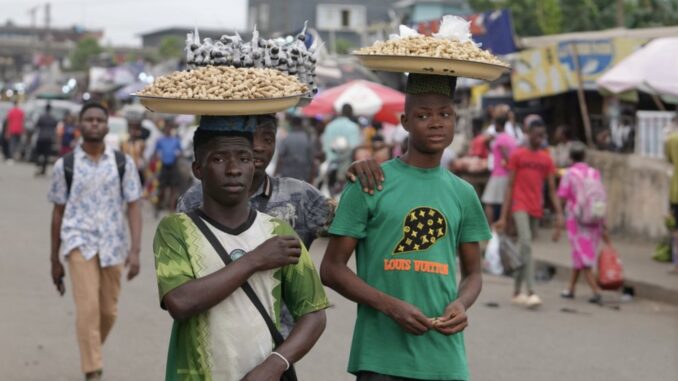

In Nigeria’s financial capital Lagos and political headquarters Abuja, a stark disconnect has emerged between impressive economic statistics and harsh street realities. While Nigeria’s foreign exchange reserves hit a four-year high of $41 billion in August 2025, social media platforms exploded with citizen frustrations, protests erupted across major cities, and millions continue battling unprecedented economic hardship despite government reform achievements.
The record-breaking foreign exchange milestone, celebrated by economists and international observers, triggered fierce social media debates that revealed deep skepticism among ordinary Nigerians. On X (formerly Twitter), users like @Ola_Mayowa2 responded to President Tinubu’s economic optimism with sharp criticism: “The economy is turning around for the rich, while the poor and the masses continue to languish in taxes and rates that you indirectly impose on us all”. Another user, @LaughNLearnX, added: “We haven’t seen any improvements, and things are getting tougher by the day. When will things get better?”.
Government Achievements Meet Street-Level Skepticism
Nigeria’s external reserves surge represents genuine macroeconomic progress, climbing from $39.54 billion to $41 billion within just 19 days of August 2025. The Central Bank of Nigeria data shows steady external accretion following months of gradual depletion attributed to external debt pressures. President Tinubu’s administration points to impressive fiscal metrics: a narrowed deficit from 5.4% of GDP in 2023 to 3.0% in 2024, revenue generation exceeding N6 trillion in the first quarter alone, and debt service-to-revenue ratio dropping from nearly 100% in 2022 to under 40% by 2024.
However, these achievements clash dramatically with lived experiences documented across social media platforms and street protests. The viral TikTok challenge initiated by Rita Ushie, a National Youth Service Corps member whose 4-minute video garnered over 4 million views, sparked the #30DaysRantChallenge movement. Ushie’s emotional plea – “I genuinely feel so overwhelmed, and I feel like if a lot of Nigerians start speaking on what we are actually going through, then maybe changes will be made in the government” – resonated with millions facing skyrocketing living costs.
Social Media Becomes Battleground for Economic Discourse
Social platforms transformed into digital battlegrounds where citizens challenged official narratives. On Instagram and TikTok, videos documenting daily struggles gained massive traction, with over 5,000 videos and posts created within 24 hours during the peak of the #30DaysRantChallenge. X influencer Odogwu Zeji, who encouraged his followers to join the movement, explained the urgency: “It is important for young Nigerians to speak up at a time like this because this APC Government, having shown that they’re clueless about leadership, is set out to turn Nigeria into a full dictatorship by silencing every opposing voice”.
The government’s response to social media criticism revealed authoritarian tendencies that further inflamed public sentiment. Ushie faced persecution from the NYSC Board, with her service year extended by two months as punishment for the backlash her video generated. This retaliation, rather than silencing dissent, catalyzed broader participation in what became a national conversation about economic hardship versus official statistics.
Poverty Reality Contradicts Reserve Success
World Bank data starkly contradicts the optimistic picture painted by foreign exchange achievements. Rural poverty now affects 75.5% of the population, meaning three out of four rural dwellers live below the poverty line. Nationally, poverty climbed from 40% in 2018 to 46% in 2023, with projections indicating over 54% of Nigerians will live in poverty by 2024. An additional 42 million people have fallen into poverty since 2018/19, bringing the total number of extremely poor Nigerians to 106 million.
In Lagos markets, the disconnect becomes viscerally apparent. Tomato seller Farouk Dalhatu reported that a basket of tomatoes now costs 55,000 naira – about double the national minimum wage – up from 12,000 naira in December. “They are just trying to find what they can eat now and not do the tomatoes business,” he said, pointing to several empty stalls where former traders abandoned their businesses.
Street protests erupted across Nigerian cities in August 2024, with thousands participating in “days of rage” demonstrations despite government warnings. In Abuja, law enforcement deployed tear gas against hundreds of protesters at Eagle Square. Lagos, typically vibrant, became subdued with many shops shuttered and increased military presence visible. Protesters carried signs declaring “end bad governance” and “hunger is killing us,” with trader Ibrahim Suleiman expressing the sentiment: “My children are unable to attend school due to financial constraints. We’re starving”.
The economic reforms praised internationally have created immediate hardship for millions. Blessing Joseph, an Abuja-based entrepreneur, saw her weekly income collapse from 30,000 naira to just 5,000 naira: “People used to place orders. I’ll design for them, sometimes even for weddings I’ll make souvenirs for them, but now those orders are not coming”. Civil servant Aisha Musa captured the broader sentiment: “The removal of fuel subsidies and devaluation of the Naira have left civil servants poorer, as our take-home pay can no longer take us home”.
Despite government claims of economic recovery, street-level realities reveal persistent unemployment, particularly among youth. Nigeria’s youth unemployment rate reached 53.4% by 2020, meaning approximately 13.9 million youths were unemployed. The crisis has pushed many into informal economies and street hawking, as documented in viral social media videos showing increasing numbers of Lagos residents turning to mobile trading for survival.

buy prednisone online from canada: trusted steroid medication source – prednisone 50 mg coupon
**mitolyn reviews**
Mitolyn is a carefully developed, plant-based formula created to help support metabolic efficiency and encourage healthy, lasting weight management.
Fala, apostadores! Tô buscando um app novo pra dar uns palpites e me indicaram o DonaldBetApp. Alguém usa? Acha que vale a pena baixar? Me contem! Se quiserem saber mais: donaldbetapp
I’m all about bong88keonhacai. Good odds and smooth experience, gotta love it
Alright, cm88bet… Another site to add to the list. User experience is so-so in my opinion but its interface is responsive enough on every device. Check it out yourself: cm88bet.
PHSpinAppLogin, logging in worked without any issues. App runs smoothly, so that’s a plus. If you’re into this kind of thing, give it a shot. phspinapplogin
Okay, Gamezoneph.org is a must for PC games. I could easily download tons of games and was able to find many games I liked. Definitely worth checking out! gamezoneph