Withdrawing ₦650,000 in a week? How to check your bank’s excess cash fee
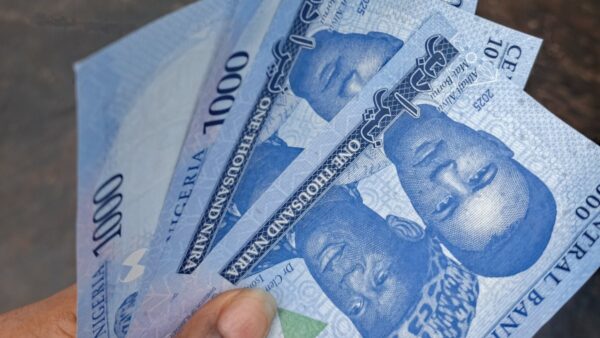

If your personal cash withdrawals total ₦650,000 in one week, the excess-withdrawal fee should be ₦4,500: 3% of the ₦150,000 above the ₦500,000 threshold. It should not be calculated on the entire withdrawal.
That calculation concerns the excess-cash fee. To check an actual debit, ask your bank to identify each charge separately.
What the CBN rule says
The CBN’s December 2, 2025 circular, effective January 1, 2026, sets weekly cash thresholds of ₦500,000 for individuals and ₦5 million for companies. Excess withdrawals attract 3% and 5%, respectively, on the excess amount.
ATM and POS cash withdrawals count towards the weekly total. The circular also sets an ATM ceiling of ₦100,000 daily per customer and ₦500,000 weekly. Over-the-counter encashment of third-party cheques remains limited to ₦100,000 and counts towards the weekly total.
How the ₦4,500 calculation works
Here is an illustrative personal-account calculation:
| Item | Amount |
|---|---|
| Total cash withdrawn during the week | ₦650,000 |
| Individual threshold | ₦500,000 |
| Excess amount | ₦150,000 |
| Fee: ₦150,000 × 3% | ₦4,500 |
Applying 3% to ₦650,000 produces ₦19,500—₦15,000 more than the correct excess-fee calculation.
The CBN’s February 2026 FAQ confirms that the percentage applies only to the excess. It also clarifies that withdrawals are aggregated across a customer’s accounts and channels within a bank or other financial institution. An additional account at the same institution should therefore not be treated as a separate allowance.
Check your statement in five steps
The following is Financial Watch’s practical checking method:
- Identify the disputed debit. Record its date, amount and description.
- List the cash withdrawals used in the calculation. Ask the bank to specify the beginning and end of the week it assessed.
- Reconcile the list with your records. Match statement entries to receipts and flag any transaction you do not recognise.
- Calculate the excess. For the personal-account example above, subtract ₦500,000 from ₦650,000 before applying 3%.
- Request an itemised explanation. Ask the bank to separate the excess-withdrawal fee from other transaction charges and identify the basis for each.
This distinction matters because the CBN FAQ says standard ATM transaction charges still apply. The excess fee is not necessarily the only charge associated with a withdrawal.
Exceptions and limits to understand
Section 10 of the CBN circular exempts two categories from the weekly threshold and excess-fee provisions:
- Revenue-generating accounts of federal, state and local governments.
- Accounts held by microfinance banks and primary mortgage banks with commercial and non-interest banks.
That second exemption concerns the institutions’ accounts; it does not describe every customer account at a microfinance bank.
The circular removes the previous exemptions for embassies, diplomatic missions and aid-donor agencies. It also ends the special monthly authorisation for individuals to withdraw ₦5 million and companies ₦10 million.
The CBN FAQ separately clarifies that foreign-currency withdrawals fall outside these limits, but naira withdrawals using foreign cards remain covered. It also says customers do not need additional documentation or justification simply to exceed the threshold; the applicable excess charge still applies.
How to complain about an incorrect charge
Complain to your bank first. The CBN’s official complaint guide gives banks 30 days to resolve excess-charge complaints before escalation to its Consumer Protection Department. This procedure comes from the complaint guide, not the cash-withdrawal circular.
You can adapt this request:
Please review the debit of ₦[amount] dated [date]. My records show cash withdrawals totalling ₦[total] during the period concerned. Please provide the transactions included, the applicable threshold, the excess amount and the percentage charged. Please correct any error and provide a complaint reference.
Keep the acknowledgement, reference number, statement and relevant receipts.
If the excess-charge complaint remains unresolved after 30 days, follow the contact instructions on the CBN’s official complaint page. Include your contact details, the institution’s name, transaction dates, amount disputed, supporting documents and evidence that you complained to the bank first. Do not include your PIN or password.
Related Financial Watch guides
For other payment problems, read:
- OPay POS: what to do when a customer is debited but your merchant wallet shows no payment.
- A customer disputes a ₦48,000 sale: what a Paystack merchant should keep.
Sources checked on November 28, 2026: CBN Revised Cash-Related Policies circular; CBN February 2026 FAQ; CBN Complaint Lodgment guide. Calculations are illustrative.